


Chemical Warfare Agent Decontamination: Industrial Implications
Total Group of Companies
In the complex landscape of modern industry, chemical agent decontamination needs trained responders, safe exposure control, and timely medical assistance. For an industrial facility, the immediate priority is to protect people and activate specialist support, not identify an unfamiliar substance through trial and error. Routine spill equipment does not establish readiness for a suspected chemical warfare agent.
Health Canada recognizes that chemical emergencies can result from accidents or deliberate acts. The distinction matters for coordination, but workers should not delay emergency notification while deciding which has occurred. This article addresses facility preparedness, not agent identification, treatment or cleanup procedures. 1
Treat a suspected agent release as a specialist emergency
Activate the site emergency plan and call 911 from a safe location. Explain what was observed, where exposure may have occurred and whether people need medical assistance. Keep workers away from the suspected source; do not assign an untrained employee to investigate or collect a sample.
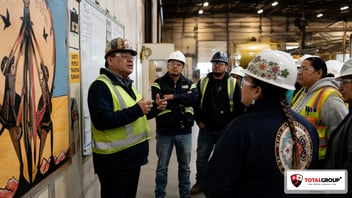
CCOHS includes deliberate releases of toxic chemicals among the hazards considered in emergency planning. It recommends coordination with fire, police and ambulance services before an incident, with clear responsibilities and alternate communication methods. Outside authorities may assume control of the scene. 2
Make evacuation and access decisions together
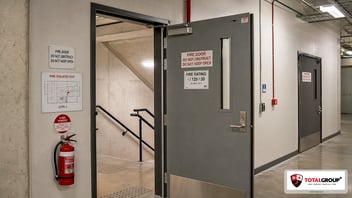
A familiar muster point may be unsuitable if it lies near the suspected release. Plans should provide alternatives and explain who can redirect workers. Evacuation or shelter decisions need to reflect the incident and directions from responding authorities, rather than a fixed assumption that everyone should go outside. US CDC public guidance also emphasizes following authorities' evacuation or shelter instructions. 9
In a hypothetical receiving area incident, several workers report sudden irritation near an unfamiliar package. The useful response is emergency notification, controlled access and accounting for affected workers, not opening the package to confirm its contents.
Protect clean areas while arranging medical care
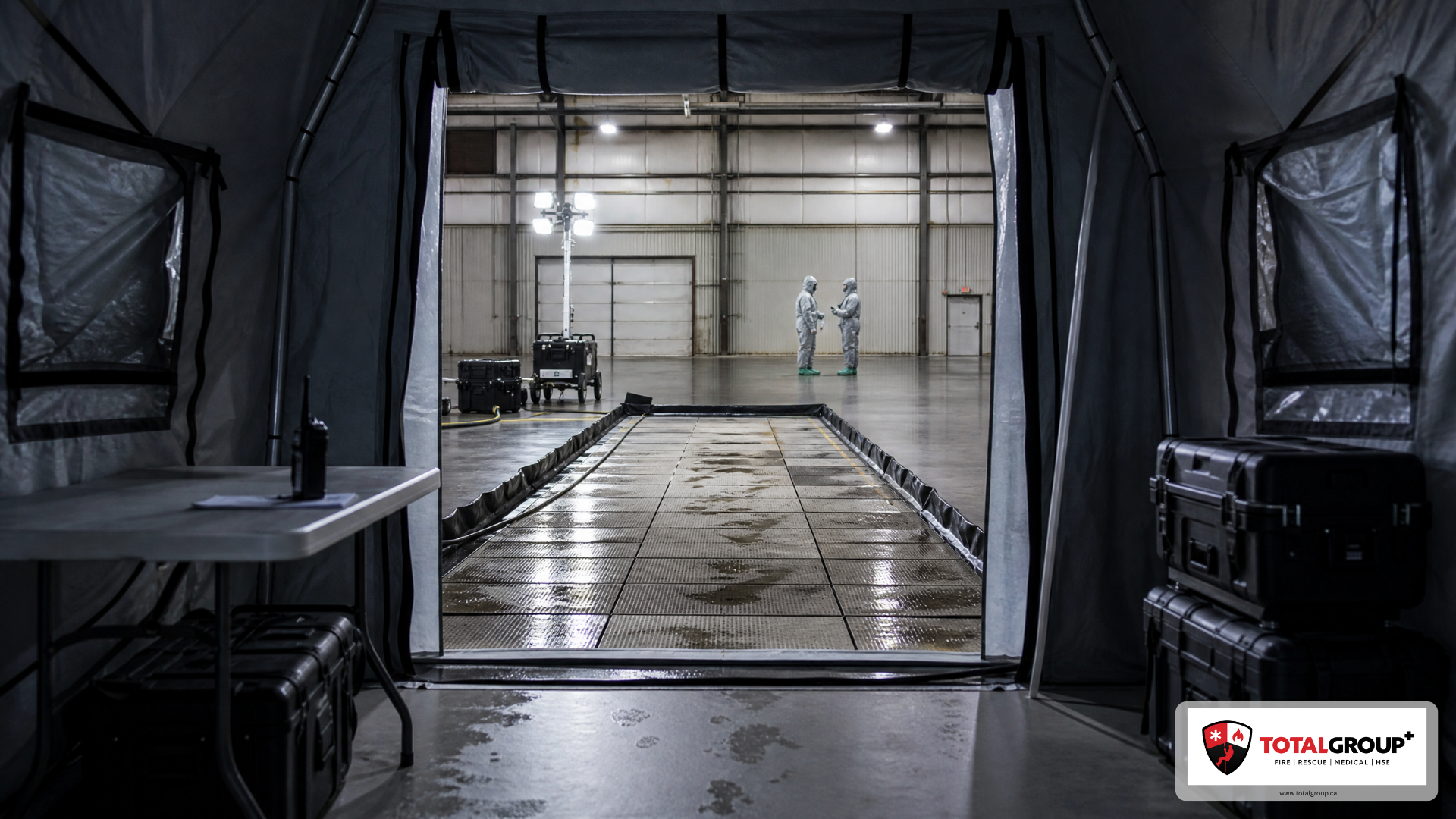
Contaminated clothing, equipment and surfaces can transfer hazardous material to helpers, vehicles and medical areas. US OSHA decontamination guidance explains that the cleaning process itself can also expose personnel or create incompatible chemical reactions. Canadian requirements take priority in Canada; OSHA guidance is supplementary, not Canadian law. 3
Coordinate decontamination with patient needs
Arrange urgent medical assistance while responders assess contamination and direct decontamination. Workers should follow emergency instructions promptly; a complete equipment cleanup must not become a reason to postpone necessary patient care. Avoid improvised chemical neutralization or assuming one washing method is appropriate for every substance.
Plan a receiving area with privacy, clean replacement clothing and protection against cold. Alert ambulance and receiving medical personnel to possible contamination before transfer. In a hypothetical exercise, an exposed worker enters the regular first aid room without warning. The finding should lead to a clearer notification and receiving arrangement, not simply another reminder to keep the room tidy.
Match preparedness to Canadian workplace duties
Requirements depend on the province, territory or federal jurisdiction. For emergencies that may require rescue or evacuation, Alberta OHS Code Part 7 requires a current emergency response plan developed with affected workers, designated emergency workers, appropriate training and simulation exercises. These duties do not establish a universal annual drill schedule. 4
Alberta Part 4 separately addresses facilities needed to decontaminate workers before leaving where they may be contaminated by harmful substances. It also requires immediate access to appropriate emergency washing where chemicals harmful to eyes or skin are used. A planned decontamination line does not replace immediate emergency washing. 5
Verify protection rather than relying on equipment labels
Respiratory protection requires qualified hazard assessment and a program covering selection, fit testing, training and maintenance. Air purifying respirators are unsuitable for oxygen deficient atmospheres or those immediately dangerous to life or health. CCOHS references CSA Z94.4 for respirator selection, use and care; neither general guidance nor owning a respirator establishes specialist chemical agent response capability. 6
WHMIS safety data sheets provide information about known hazardous workplace products. They support first aid and exposure planning, but an existing product sheet cannot identify an unknown substance or supply a complete site response procedure. 7
Plan recovery before allowing work to resume
Identify who will authorize access, assess residual contamination and decide whether equipment can be reused. Appearance alone does not demonstrate effective decontamination. Review specialist findings and manufacturer limitations before returning affected assets to service. 3
Plan collection and classification of rinse water and discarded materials. Subject to statutory exceptions, British Columbia's Environmental Management Act restricts waste discharges from prescribed activities and prohibits discharges causing pollution. A drain is not an assumed disposal route. 8
Exercise communications and clean area protection with external responders, then assign owners to correct gaps. Total Group's
HSE services provide a relevant starting point for discussing general preparedness planning. Any specialist chemical agent capability must be confirmed separately before being included in a response plan.
To learn more about how Total Group of Companies can support industrial chemical incident preparedness, visit us at www.totalgroup.ca or contact our team directly. We are ready to help you build a safer, more resilient operation.
References
1. Health Canada. Chemical, biological, radiological, nuclear and explosive events.
2. CCOHS. Emergency Planning.
3. US OSHA. Hazardous Waste Decontamination.
4. Alberta. OHS Code Part 7, sections 115 to 117.
5. Alberta. OHS Code Part 4, sections 23 and 24.
6. CCOHS. Respirators: Respirator Selection.
7. CCOHS. WHMIS: Safety Data Sheet.
8. British Columbia. Environmental Management Act, sections 6 and 7.
9. US CDC. About Chemical Emergencies.