
Hearing Conservation Programs: Engineering Controls and Audiometric Testing
Total Group of Companies
In the complex landscape of modern industry, hearing conservation programs protect workers from noise-induced hearing loss through controls and monitoring. Facilities across North America face unique challenges that require specialized knowledge and proactive strategies. Understanding how to implement comprehensive hearing conservation is not just about regulatory compliance; it is about protecting the workforce, safeguarding valuable assets, and ensuring business continuity. Total Group of Companies has spent years developing expertise in this critical area, recognizing that comprehensive hearing protection is the only way to mitigate noise hazards effectively. This article explores the fundamental principles, current best practices, and future trends that every industrial leader needs to know.
The Core Principles and Operational Impact
At the heart of hearing conservation programs lies a set of core principles that dictate how facilities should approach worker protection from noise hazards. Noise assessment must be thorough. Engineering controls must be prioritized. Administrative controls must be implemented. Hearing protection must be provided. Audiometric testing must be conducted. Worker training must be comprehensive.
When these principles are applied correctly, they create a robust framework that prevents hearing loss before it occurs. The operational impact of a well designed hearing conservation program cannot be overstated. Facilities that prioritize these elements consistently report fewer hearing loss cases, reduced worker absences, lower insurance premiums, and higher employee engagement. It requires a deep understanding of noise hazards and the deployment of targeted solutions to address them.
The most successful organizations integrate hearing conservation into their daily routines, making hearing protection an inherent part of the production process rather than an afterthought. This integration includes systematic noise assessment, prioritized engineering controls, administrative procedures, hearing protection provision, and regular audiometric testing.
Noise hazards include equipment noise, machinery noise, process noise, and impact noise. Equipment noise includes compressors, pumps, fans, and motors. Machinery noise includes grinding, cutting, and stamping operations. Process noise includes pneumatic tools and hydraulic systems. Impact noise includes hammering and riveting operations. Each noise source requires different control approaches.
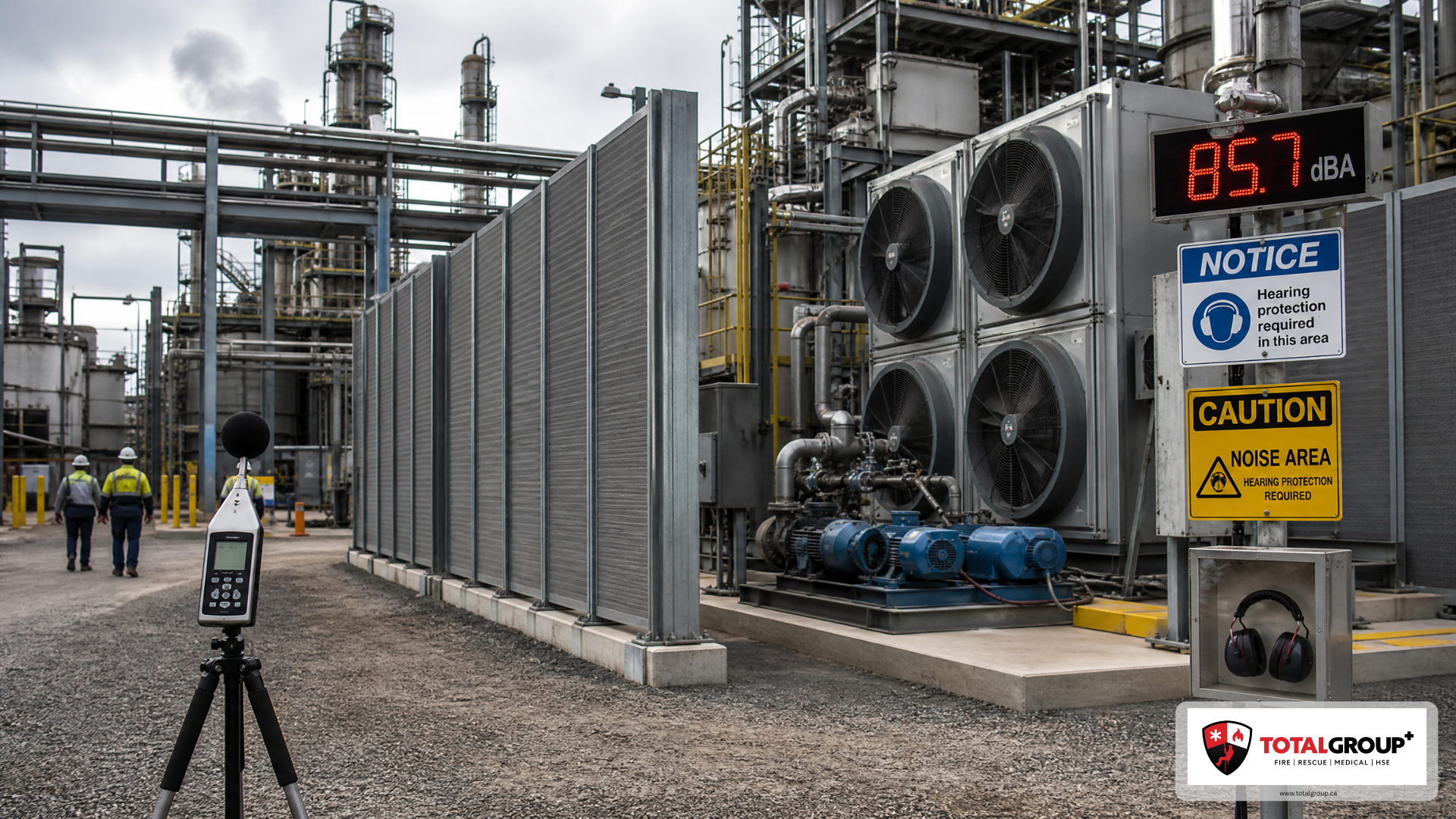
Engineering controls reduce noise at the source. Vibration isolation mounts reduce equipment vibration and noise. Acoustic enclosures contain noise from equipment. Sound dampening materials absorb noise. Mufflers reduce exhaust noise. Barrier walls block noise transmission. Equipment replacement with quieter alternatives reduces noise. Engineering controls are the most effective approach to noise reduction.
Administrative controls reduce worker exposure to noise. Rotation programs limit exposure duration. Maintenance programs reduce equipment noise. Process modifications reduce noise generation. Scheduling changes minimize peak noise exposure. Administrative controls support engineering controls but do not eliminate noise hazards.
Hearing protection equipment includes earplugs, earmuffs, and canal caps. Foam earplugs provide good attenuation when inserted properly. Pre molded earplugs offer convenience and reusability. Earmuffs provide good attenuation and visibility. Canal caps provide moderate attenuation. Selection depends on noise level, comfort, and workplace conditions.
Audiometric testing measures hearing ability over time. Baseline testing establishes initial hearing levels. Annual testing detects hearing changes. Testing identifies workers with hearing loss. Testing results guide hearing protection improvements. Proper testing requires qualified audiologists and calibrated equipment.
Navigating Regulatory Standards and Compliance
Compliance with industry standards is a foundational element of hearing conservation programs. Regulatory bodies such as OSHA, NFPA, and provincial health and safety organizations including WorkSafeBC and provincial occupational health and safety agencies continuously update their guidelines to reflect new research and evidence. Staying ahead of these changes is a significant challenge for facility managers.
OSHA Hearing Conservation Amendment requires hearing conservation programs when noise exposure exceeds 85 decibels averaged over eight hours. OSHA requires noise monitoring and assessment. OSHA requires engineering and administrative controls. OSHA requires hearing protection provision. OSHA requires audiometric testing. OSHA requires training and record keeping. In Canada, WorkSafeBC and provincial occupational health and safety regulations establish requirements for hearing conservation programs. The Canadian Centre for Occupational Health and Safety (CCOHS ) provides guidance on hearing conservation program implementation. CSA Z1007 Standard for Hearing Protection establishes Canadian standards for hearing protection selection and use.
A proactive compliance strategy involves regular audits, continuous training, and a commitment to exceeding minimum requirements. By aligning operational practices with the latest standards, companies not only avoid costly penalties but also demonstrate genuine commitment to the well being of their personnel. This includes maintaining written hearing conservation programs, documenting all noise assessments, maintaining audiometric testing records, and maintaining training records. Organizations should conduct annual compliance reviews to ensure that all hearing conservation systems meet the highest industry benchmarks.
Hearing conservation programs must include training for all personnel. Personnel must understand noise hazards in their work areas. Personnel must know hearing protection selection and use. Personnel must understand maintenance and storage of hearing protection. Personnel must know when hearing protection is required. Personnel must understand audiometric testing procedures. Training must be documented and refreshed annually. Organizations should maintain records of all personnel who have received hearing conservation training.
Implementing Effective Solutions in the Field
The transition from theory to practice is often the most difficult phase of implementing hearing conservation programs. Implementing effective solutions requires a combination of the right resources, specialized training, and a culture that supports continuous improvement. Field implementation must be tailored to the specific needs of the facility, taking into account noise sources, worker exposure patterns, and available resources.
Effective field implementation includes several key components. First, conduct comprehensive noise assessment. Second, implement engineering controls. Third, implement administrative controls. Fourth, provide hearing protection. Fifth, conduct audiometric testing.
Noise assessment procedures must identify all noise sources. Assessment must measure noise levels with calibrated equipment. Assessment must determine exposure duration for each worker. Assessment must identify workers exceeding exposure limits. Assessment must be documented and updated when equipment changes. Assessment results determine control priorities and hearing protection needs.
Engineering control procedures must prioritize noise reduction at the source. Controls must be evaluated for effectiveness. Controls must be installed and maintained properly. Controls must be documented with noise reduction measurements. Controls must be reviewed when equipment changes. Effective engineering controls reduce or eliminate hearing protection needs.
Administrative control procedures must limit worker exposure to noise. Rotation programs must be scheduled and documented. Maintenance programs must be established and followed. Process modifications must be evaluated and implemented. Scheduling changes must be coordinated with operations. Administrative controls support engineering controls.
Hearing protection procedures must ensure proper selection and use. Selection must match noise levels and frequencies. Fit testing must ensure proper seal. Training must cover insertion and removal techniques. Maintenance must include cleaning and storage. Replacement must occur when protection is damaged. Proper use ensures adequate protection.
Audiometric testing procedures must establish baseline hearing and detect changes. Testing must be conducted by qualified audiologists. Testing must use calibrated equipment. Testing must be documented with dates and results. Testing must be repeated annually. Testing results must be reviewed and discussed with workers. Audiometric testing detects hearing loss early.
Conclusion
Addressing the challenges associated with hearing conservation programs is an ongoing process that demands vigilance, expertise, and a commitment to excellence. As industrial facilities continue to operate and equipment continues to generate noise, so too must the strategies used to protect worker hearing. By focusing on core principles of noise reduction and hearing protection, maintaining strict regulatory compliance, and implementing tailored hearing conservation programs in the field, organizations can create a safer, more resilient operation. The investment in comprehensive hearing conservation programs today pays dividends in reduced hearing loss, improved worker health, enhanced safety culture, and improved operational performance.
Ready to strengthen your hearing conservation program? Contact Total Group of Companies today at www.totalgroup.ca to learn how our expert teams can support your operations.
References
1. Occupational Safety and Health Administration (OSHA). Hearing Conservation Amendment. Washington, DC: Department of Labor, 2023.
2. Canadian Centre for Occupational Health and Safety (CCOHS). Hearing Protection. Hamilton, ON: CCOHS, 2023.
3. WorkSafeBC. Hearing Conservation Requirements. Victoria, BC: Province of British Columbia, 2023.
4. Canadian Standards Association (CSA). Z1007 Standard for Hearing Protection. Toronto, ON: CSA, 2023.
5. National Fire Protection Association (NFPA). NFPA 1500 Standard on Fire Department Occupational Safety and Health Program. Quincy, MA: NFPA, 2023.
6. National Institute for Occupational Safety and Health (NIOSH). Hearing Conservation Program. Cincinnati, OH: NIOSH, 2023.
7. International Organization for Standardization (ISO). ISO 4871 Acoustics Hearing Protectors Characteristics of Earplugs and Earmuffs. Geneva, Switzerland: ISO, 2023.
8. American Society of Safety Professionals (ASSP). Hearing Conservation Best Practices. Des Plaines, IL: ASSP, 2023.