Managing Fatigue During Extended Turnaround Operations
Total Group of Companies
In the complex landscape of modern industry, managing turnaround fatigue requires sound schedules, recovery time and a clear response to worker impairment. Plan staffing and relief before the shutdown begins, then adjust when delays, overtime or changing tasks reduce the opportunity to recover. A schedule that fits the project deadline still needs to be safe for the people carrying it out.
During a turnaround, repeated long shifts can combine with night work, demanding maintenance and travel. CCOHS identifies these as fatigue factors that can affect concentration, judgement and reaction time. The practical question is whether crews can perform their assigned work safely, not simply whether they have completed the required hours. 1
Build recovery into the turnaround schedule
Assess consecutive shifts, overtime and changes between day and night work alongside the actual task demands. Include permit preparation, handovers and travel when considering how much time remains for sleep. Time away from the worksite is not necessarily time spent recovering. CCOHS warns that long journeys after extended workdays can add to fatigue. 2
Provide relief before the schedule slips
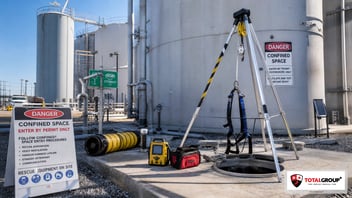
Identify who can cover breaks, delayed work and unexpected absences without repeatedly extending another person's shift. A confined space attendant or safety watch needs appropriate relief; rotating an exhausted worker into another demanding role does not resolve the concern. Plan protected breaks and suitable recovery facilities, while keeping required task coverage in place. 1
In a hypothetical shutdown, a delayed vessel inspection pushes a planned restart into the night. The supervisor reviews crew hours and available relief before continuing. The decision may be to bring in rested, qualified personnel or reschedule the work. Continuing with the original crew should not be the automatic answer simply because they know the job.
Match fatigue controls to the work being performed
CCOHS advises assessing physical and mental demands, workplace conditions and task timing. Where practicable, schedule demanding or critical activities away from periods of reduced alertness. Provide suitable lighting and address heat, noise and repetitive work. These measures support a manageable workload but cannot compensate for inadequate sleep. 1
Reassess exposures when shifts become longer
An extended shift can change exposure to chemicals, noise and other hazards. Have competent personnel review the applicable exposure limits, assessment methods and controls rather than assuming an assessment for a shorter shift remains adequate. CCOHS specifically recommends reevaluating physical and chemical exposures when the workday increases. 2
WHMIS training must address the products and procedures workers actually encounter, including emergency actions. Keep this information accessible during night shifts and contractor handovers. Fatigue management does not replace isolation, atmospheric testing or other controls required for the task. 6
Respond to fatigue without turning it into blame
Explain how workers can report concerns about themselves or colleagues and who has authority to arrange relief. Reduced concentration, repeated mistakes or difficulty staying awake warrant attention. Record observable facts rather than labelling someone lazy or assuming the cause. CCOHS notes that fatigue can also involve medical conditions, medications and stress. 1
Make safe relief and travel practical
In a hypothetical night shift, a worker repeatedly loses track of a permit briefing and reports very little sleep. The supervisor pauses the affected work, arranges suitable coverage and follows the site's assessment process. If a medical concern is suspected, seek appropriate medical assistance rather than diagnosing fatigue from behavior alone.
Consider safe transport or accommodation when someone cannot safely drive after work. Encourage consistent sleep routines and access to meals and water. Coffee and a short break should not be treated as proof that a fatigued worker is ready for a hazardous task. CCOHS describes recovery, scheduling and workplace support as parts of a fatigue program. 1
Apply Canadian duties and review the program during execution
Canadian requirements take priority in Canada. In British Columbia, OHS Regulation section 4.19 requires workers to report impairment that may affect safe performance and prohibits knowingly working where it may create undue risk. Employers must not assign impaired workers to activities with that risk. The regulation's note expressly includes fatigue. 3
Employment standards are a separate consideration. Alberta's hours of work and rest rules include exceptions and variances; confirm the rules applicable to the workers and schedule. Permission to work longer hours does not establish that the work is safe. 4
CSA Z1008 covers impairment management but does not specifically address workplace fatigue management. US OSHA's worker fatigue guidance is supplementary, not Canadian law. Review reported concerns, missed breaks and repeated overtime during execution, and revise controls when the plan is not working. 5 8
Keep environmental response responsibilities covered through shift changes. For example, British Columbia requires immediate reporting of qualifying spills, including those meeting quantity thresholds or affecting or potentially affecting water. A fatigue report does not replace that notification. 7
Total Group's turnaround safety advisors support field observations, coordination and escalation within the authority assigned by the site. Share the schedule and relief arrangements early; the employer and responsible site authorities retain their duties.
To learn more about how Total Group of Companies can support fatigue management during extended turnaround operations, visit us at www.totalgroup.ca or contact our team directly. We are ready to help you build a safer, more resilient operation.
References
1. CCOHS. Fatigue.
2. CCOHS. Extended Workday: Health and Safety Issues.
3. WorkSafeBC. OHS Regulation, section 4.19.
4. Alberta. Employment standards: Hours of work and rest.
5. CSA Group. CSA Z1008:21 (R2025), Management of impairment in the workplace.
6. CCOHS. WHMIS: Education and Training.
7. British Columbia. Report a spill.
8. US OSHA. Long Work Hours, Extended or Irregular Shifts, and Worker Fatigue.