Pressure Testing After Turnaround: Hydrostatic and Pneumatic Test Safety
Total Group of Companies
In the complex landscape of modern industry, pressure testing after turnaround requires clear boundaries, suitable equipment, and control of stored energy. Start by defining what the test must demonstrate and which repaired or modified components it covers. A turnaround does not make every system subject to the same test, and completing a test does not automatically authorize restart.
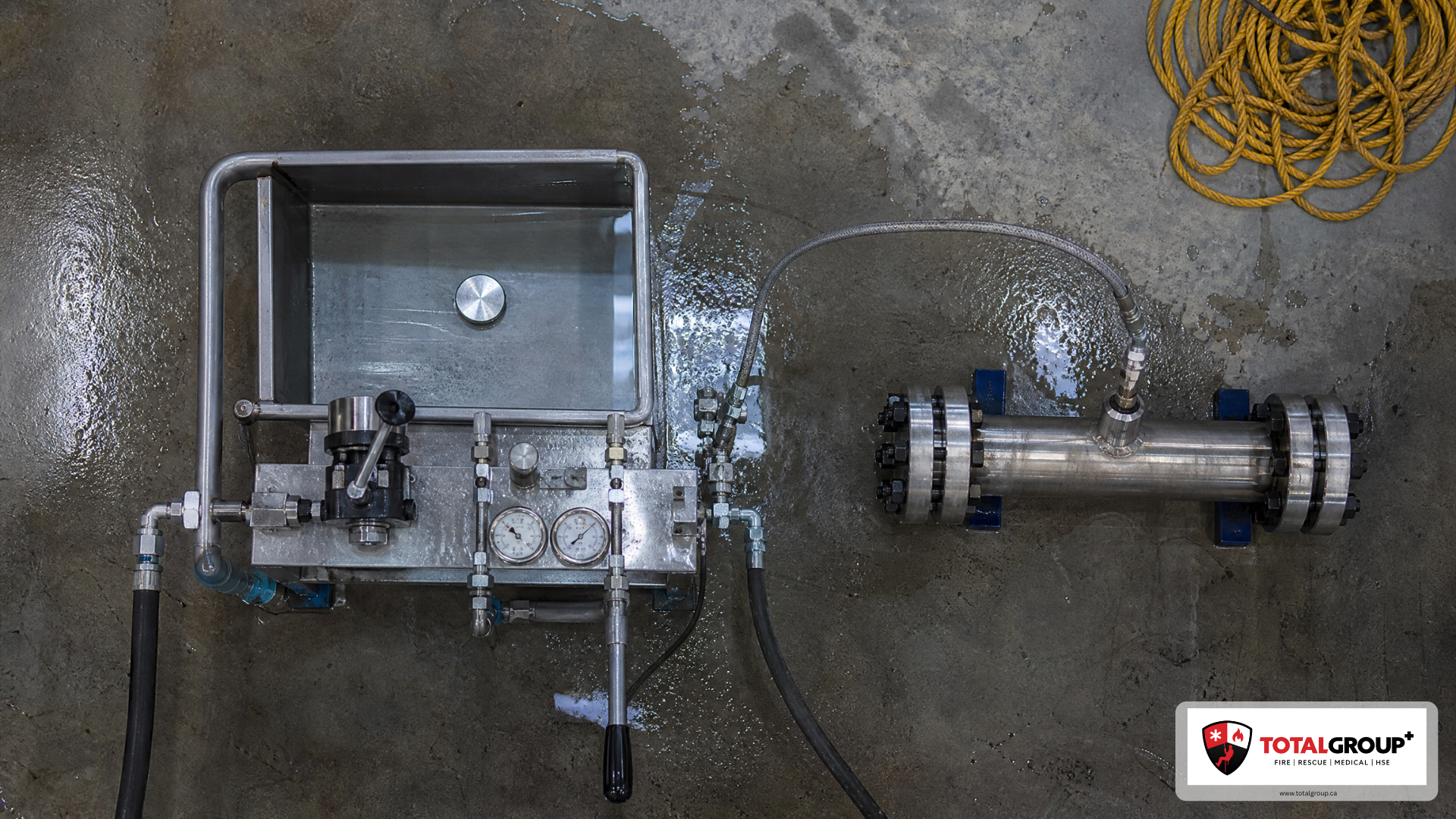
Hydrostatic testing uses a liquid, usually water, while pneumatic testing uses a gas. Gas testing generally stores considerably more energy than liquid testing at comparable pressure and volume. Hydrostatic testing still presents hazards, including hose failure, ejected fittings and pressurized fluid injection. The method belongs in the technical review, not a last minute scheduling decision. 1
Choose the test method around the equipment and the risk
Establish the governing code, repair or alteration requirements and intended acceptance criteria. The responsible technical authority should define whether the objective is strength testing, leak testing or another specified check. A record that pressure was reached cannot explain whether the correct boundary, duration or acceptance criteria were used. UK pressure test guidance calls for identifying the assembly and considering how repairs or modifications may have affected it. 1
Do not substitute pneumatic testing for convenience
Using liquid can reduce stored energy compared with gas. Review compatibility, air removal and how test liquid will be removed. Trapped air adds stored energy to a liquid test. Where pneumatic testing is proposed, assess the reason, stored energy and safeguards under the applicable requirements. A difficult drying requirement does not by itself authorize changing the approved method. 1
In a hypothetical turnaround, a crew proposes switching to air because water removal could delay handover. The team pauses for technical review and the required authorization instead of copying the hydrostatic test plan and changing the medium.
Confirm the test boundary before adding pressure
Walk down the test arrangement against the approved documents. Identify temporary closures, connected branches, instruments and equipment excluded from the test. Check that the intended isolation and test boundary actually match the field arrangement. A valve position on a drawing is not evidence that neighbouring equipment is protected from test pressure.
Inspect the temporary components as carefully as the asset
The pump, hoses, connectors, gauges and closures need to be suitable for the test pressure and medium. Check condition, compatibility and the required inspection or calibration records. Repeatedly assembled test fittings can suffer wear and fatigue. A damaged connector can become a projectile even when the pipe itself remains intact. UK HSE guidance specifically addresses these failures. 1
Define how pressure will be controlled, monitored and safely released. Address trapped pressure and prevent unintended operation of connected systems. CCOHS explains that closing a supply valve does not remove residual energy already contained in a hydraulic or pneumatic system. 2
Apply the Canadian pressure equipment requirements that govern the work
Canadian requirements take priority in Canada. For Alberta pressure piping, hydrostatic leak testing is the regulatory default. Pneumatic testing requires the appropriate ABSA acceptance route. An authorized organization may use an accepted standard procedure within AB 522 limits; tests outside those limits require a registered application specific procedure. Acceptance does not mean ABSA attends every test. 4
ABSA's AB 513 requires testing requirements in repair or alteration documentation for regulated equipment. Where the original code's method is impractical, an alternative needs technical justification and applicable acceptance, not a decision to skip testing. 3
CSA B51 addresses boilers, pressure vessels and pressure piping. Confirm regulatory adoption and the relevant construction code rather than copying a pressure multiplier from another project. UK HSE GS4 is supplementary technical guidance, not Canadian law. 7 1
Control access and inspection during the test
Base exclusion areas, shielding and control locations on the assessed failure consequences. Ordinary barrier tape or a mesh fence controls access but is not automatically protection against blast or flying fragments. Plan remote monitoring where practicable and control neighbouring work that could bring someone into the hazard area. 1
Never search for a pressure leak with a hand or improvise repairs while the system remains pressurized. The approved procedure must govern depressurization, verification and any subsequent intervention. Suspected fluid injection needs immediate medical assessment even if the visible wound appears small. 1 2
Close the test with controlled drainage and a documented handover
Agree on abnormal condition responses and who can stop the test. Before removing temporary equipment, verify safe pressure release. Record the actual boundary, results, deficiencies and required corrective work. Reinstatement needs its own checks; a test record cannot confirm that every temporary blind has been removed or every operating connection restored.
Plan collection and disposal of test liquid before filling. WHMIS safety data sheets support assessment of hazardous additives and residual process material. In British Columbia, determine whether the discharge activity requires authorization and comply with the applicable conditions. Do not assume used test water can enter a storm drain. 5 6
Total Group's turnaround safety advisors support work coordination and escalation within assigned authority. Engineering approval, test acceptance and restart authorization remain with the responsible parties.
To learn more about how Total Group of Companies can support pressure testing safety during industrial turnarounds, visit us at www.totalgroup.ca or contact our team directly. We are ready to help you build a safer, more resilient operation.
References
1. UK HSE. Safety requirements for pressure testing, GS4.
2. CCOHS. Hazardous Energy Control Programs.
3. ABSA. AB 513, Pressure Equipment Repair and Alteration Requirements.
4. ABSA. AB 522, Standard Pneumatic Test Procedure Requirements for Piping Systems.
5. CCOHS. WHMIS: Safety Data Sheets.
6. British Columbia. Waste discharge authorization.
7. CSA Group. B51:24, Boiler, pressure vessel, and pressure piping code.