





.png?width=352&name=Blogs%20images%20(57).png)
Telemedicine in Industrial Medicine: Remote Physician Consultation
Total Group of Companies
In the complex landscape of modern industry, telemedicine in industrial medicine: remote physician consultation is essential for operational success. Facilities across North America face unique challenges that require specialized knowledge and proactive strategies. Understanding the nuances of this subject is not just about regulatory compliance; it is about protecting the workforce, safeguarding valuable assets, and ensuring business continuity. Total Group of Companies has spent years developing expertise in this area, recognizing that a comprehensive approach is the only way to mitigate risks effectively. This article explores the fundamental principles, current best practices, and future trends that every industrial leader needs to know.
The Core Principles and Operational Impact
At the heart of telemedicine in industrial medicine: remote physician consultation lies a set of core principles that dictate how industrial facilities should approach risk management. When these principles are applied correctly, they create a robust framework that prevents incidents before they occur and enhances emergency response capabilities. The operational impact of a well designed system cannot be overstated. Facilities that prioritize these elements consistently report fewer disruptions, lower insurance premiums, and higher employee morale. It requires a deep understanding of the specific hazards present in the environment and the deployment of targeted solutions to address them. For instance, a core principle involves leveraging secure, real time communication platforms to connect remote industrial sites with medical professionals. This is particularly vital in Canada's vast and often isolated industrial regions, where immediate access to specialized medical care can be challenging. Telemedicine allows for timely medical assessment, diagnosis, and treatment guidance, reducing the need for costly and time consuming evacuations for non critical cases. The most successful organizations integrate these practices into their daily routines, making safety an inherent part of the production process rather than an afterthought.
Navigating Regulatory Standards and Compliance
Compliance with industry standards is a foundational element of telemedicine in industrial medicine: remote physician consultation. Regulatory bodies such as OSHA in the United States, and provincial health and safety organizations like the College of Physicians and Surgeons of Ontario (CPSO) or the College of Physicians and Surgeons of Alberta (CPSA), continuously update their guidelines to reflect new research and technological advancements. Staying ahead of these changes is a significant challenge for facility managers. A proactive compliance strategy involves regular audits, continuous training, and a commitment to exceeding minimum requirements. For example, adherence to Canadian Medical Association (CMA) guidelines for telemedicine and provincial privacy legislation, such as the Personal Health Information Protection Act (PHIPA) in Ontario, ensures that patient data is handled securely and ethically. Companies must ensure their telemedicine platforms are compliant with data security standards and that personnel are trained in their proper use. By aligning operational practices with the latest standards, companies not only avoid costly penalties but also demonstrate a genuine commitment to the well being of their personnel. Total Group of Companies specializes in helping organizations navigate this complex regulatory environment, ensuring that all systems and procedures meet the highest industry benchmarks.
Implementing Effective Solutions in the Field
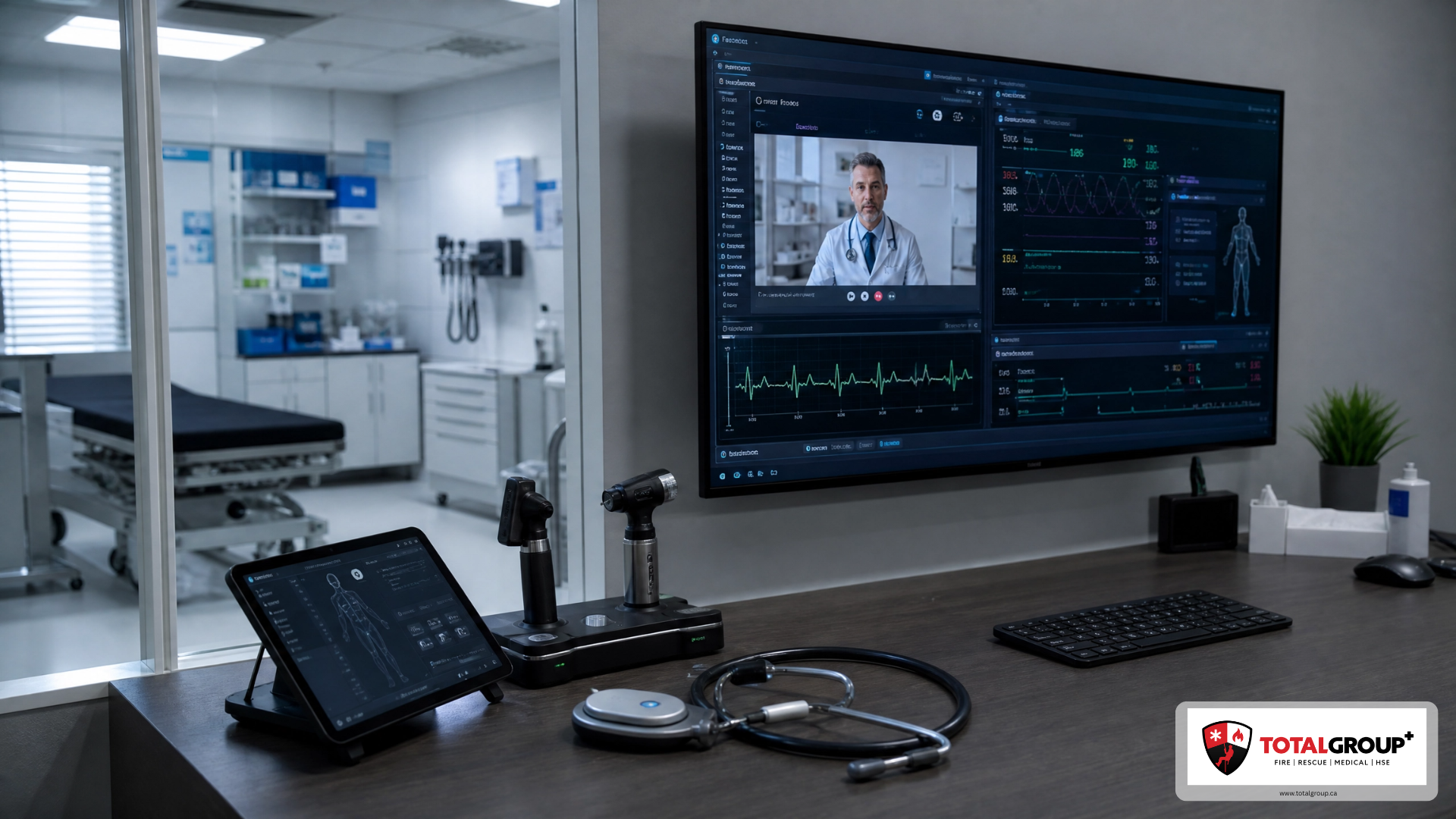
Transitioning from theory to practice is often the most difficult phase of addressing telemedicine in industrial medicine: remote physician consultation. Implementing effective solutions requires a combination of the right equipment, specialized training, and a culture that supports continuous improvement. Field implementation must be tailored to the specific needs of the site, taking into account factors such as facility layout, workforce demographics, and production schedules. For example, in a remote mining operation in Northern Quebec, industrial paramedics might use portable diagnostic devices connected to a telemedicine platform to transmit vital signs, images, and even live video to a consulting physician hundreds of kilometers away. Regular drills and practical exercises are essential to ensure that personnel can respond appropriately under pressure, such as simulating a medical emergency requiring remote specialist input. Furthermore, the integration of new technologies, such as advanced wearable sensors for continuous monitoring, artificial intelligence powered diagnostic support, and secure satellite communication systems, is transforming how these challenges are managed on the ground. Success depends on a holistic approach that combines human expertise with technological innovation, ensuring that industrial sites can provide high quality medical care regardless of their location.
Conclusion
Addressing the challenges associated with telemedicine in industrial medicine: remote physician consultation is an ongoing process that demands vigilance, expertise, and a commitment to excellence. As industrial environments continue to evolve, so too must the strategies used to protect them. By focusing on core principles, maintaining strict regulatory compliance, and implementing tailored solutions in the field, organizations can create a safer, more resilient operation. Total Group of Companies remains dedicated to providing the specialized services and support necessary to achieve these goals. Investing in comprehensive safety strategies today is the most effective way to ensure the long term success and sustainability of your industrial operations.
Ready to elevate your industrial medical strategy with cutting edge telemedicine solutions? Connect with Total Group of Companies today to discover how our expert teams can support your operations and enhance your remote healthcare capabilities.
References
1. Occupational Safety and Health Administration (OSHA). General Industry Regulations and Standards. Washington, DC: Department of Labor, 2023.
2. National Fire Protection Association (NFPA). National Fire Codes and Standards. Quincy, MA: NFPA, 2023.
3. Canadian Centre for Occupational Health and Safety (CCOHS). Industrial Safety Guidelines. Hamilton, ON: CCOHS, 2023.
4. College of Physicians and Surgeons of Ontario (CPSO). Telemedicine Guidelines. Toronto, ON: CPSO, 2023.
5. Canadian Medical Association (CMA). Virtual Care Playbook. Ottawa, ON: CMA, 2023.
.png?width=352&name=Blogs%20images%20(49).png)


