


Wildfire Smoke and Industrial Workers: Health Effects and Protective Measures
Total Group of Companies
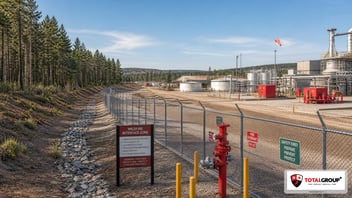
In the complex landscape of modern industry, wildfire smoke requires exposure controls, cleaner air breaks and work decisions based on changing conditions. An effective response starts with reducing exposure, not simply handing out masks. Employers need to consider outdoor tasks, smoke entering buildings and the extra strain of physical work during hot weather. These measures address transported smoke, not firefighting.
CCOHS recommends monitoring smoke conditions, maintaining filtration and changing work when needed. A distant fire can still affect a site, so planning should begin before smoke reaches the gate. 1
Assess smoke conditions and worker health together
Wildfire smoke contains gases and fine particles. Health Canada identifies fine particulate matter, or PM2.5, as its main health risk. Poor air quality is possible even when smoke cannot be seen or smelled. Exposure may cause eye and throat irritation, coughing or headaches, and aggravate heart and lung conditions. 2
Workers doing strenuous outdoor tasks may be more affected. People with existing heart or lung conditions, older workers and pregnant workers may also need additional protection. Encourage early reporting without requiring workers to discuss personal medical information in a group briefing.
Use air quality information as a decision input
Check local Air Quality Health Index forecasts and alerts, then review conditions at the actual work location. The AQHI communicates community health risk; it does not replace assessment of the worker's task, exposure duration or other site contaminants. CCOHS advises limiting outdoor time, rescheduling work and cancelling outdoor work in severe circumstances. 3
Assign someone to monitor changes during the shift. A morning reading is not enough when wind direction, smoke concentration or the work itself changes.
Reduce outdoor exposure before relying on respirators
Move suitable tasks indoors, postpone strenuous work and shorten time spent in smoke. Provide breaks in an area with cleaner air rather than an open shelter that only offers shade. Closed equipment cabs may help when seals and filtration are maintained; open doors or windows can undermine that protection.
In a hypothetical maintenance outage, a crew plans outdoor material handling while smoke increases. Supervisors could move preparation indoors, delay nonessential lifts and arrange filtered recovery space. The plan should also address heat stress rather than assuming that reducing smoke exposure solves every environmental hazard.
Respond to symptoms instead of pushing through
Workers having difficulty breathing should reduce or stop activity and notify their supervisor. Arrange medical assistance for concerning symptoms. Chest pain or a suspected medical emergency requires immediate help, including 911; do not assume every symptom is simply smoke irritation. 1 2
Make indoor refuge genuinely cleaner
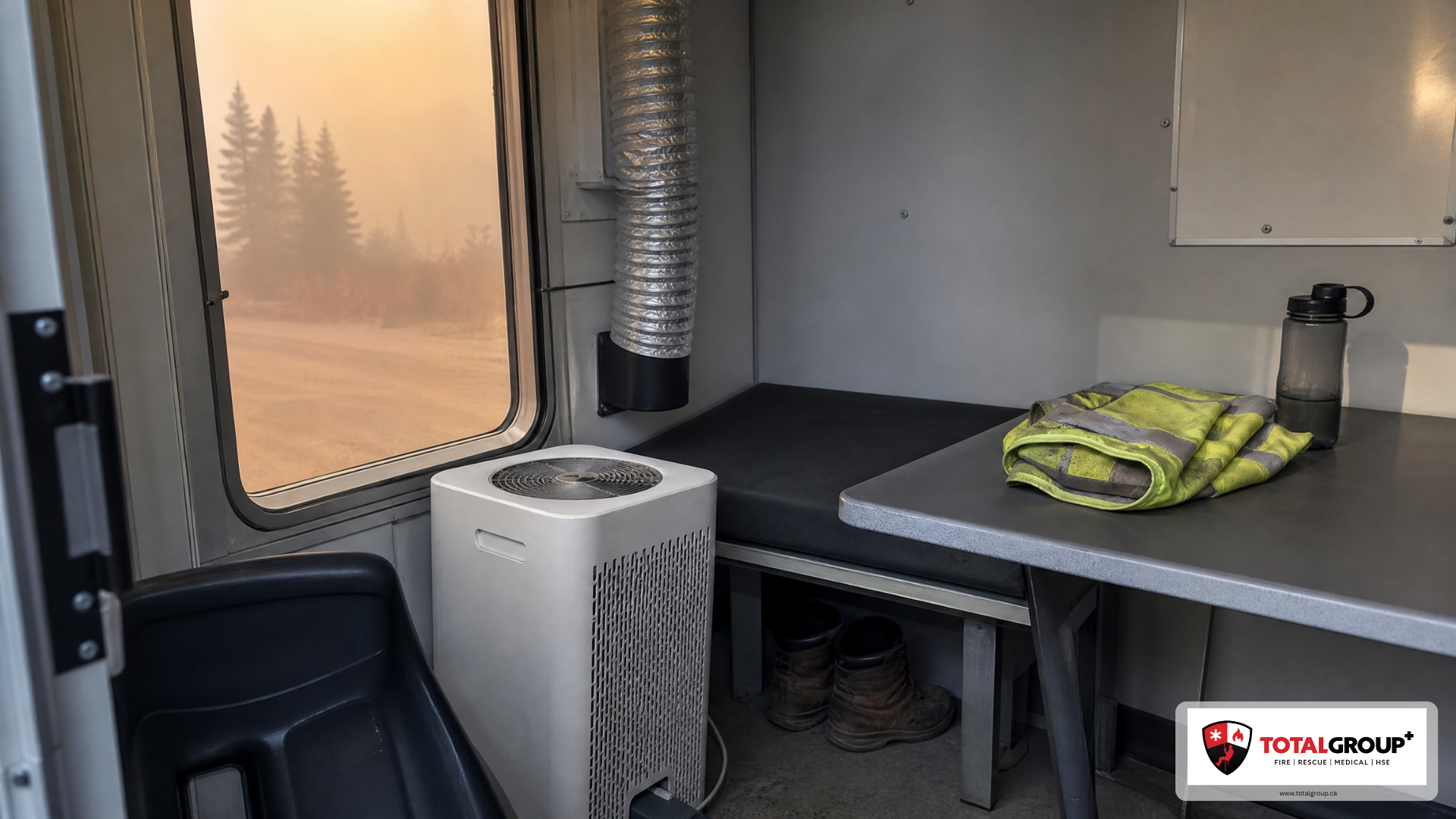
An indoor room is not automatically protected. Smoke may enter through doors, windows and ventilation systems. Health Canada's cleaner air guidance recommends suitable filtration, monitoring and knowledgeable oversight of building ventilation. Portable HEPA air cleaners can reduce particles in a room when selected for its size and operated appropriately. 4
Check ventilation changes against process hazards
Have qualified personnel review filtration and outdoor air settings. Do not disable ventilation needed to control welding fumes, chemicals or other indoor hazards just to reduce smoke entry. Review those hazards before changing settings, and maintain cooling and safe occupancy conditions.
In a hypothetical site office, an air cleaner is running but workers repeatedly prop the exterior door open. Better door management, appropriate equipment sizing and filter maintenance are more useful than assuming the appliance alone makes the room safe.
Verify respiratory protection and smoke response duties
The Public Health Agency of Canada explains that a properly worn N95 respirator can reduce exposure to fine particles but does not protect against gases in smoke. Cloth or surgical masks are not substitutes for suitable respiratory protection. Wearing a respirator can also add to heat stress. 5
Canadian requirements take priority in Canada and vary by jurisdiction. British Columbia's OHS Regulation Part 5 requires hazard assessment and control of harmful substance exposure. Air sampling is required when a walkthrough survey reveals potential airborne overexposure. WorkSafeBC treats wildfire smoke as hazardous even without a smoke specific exposure limit. A community AQHI value is not a universal Canadian legal shutdown threshold. 6
Where respirators are needed, use a respiratory protection program covering selection, fit testing, training and maintenance. CCOHS refers to CSA Z94.4 for selection, use and care. Facial hair must not interfere with the seal of a tight fitting respirator. A user seal check does not replace fit testing. 7
Keep workplace chemical controls and WHMIS training current; wildfire smoke does not replace assessment of hazardous products used on site. 8 Separately, verify local wildfire restrictions before ignition producing activities and follow evacuation directions. British Columbia's fire prohibitions can restrict activities in specified areas. 9 Total Group's HSE services provide a relevant starting point for discussing industrial hygiene and smoke response planning. Set clear responsibilities for changing work, checking controls and communicating decisions before the next smoke event.
To learn more about how Total Group of Companies can support wildfire smoke exposure assessment and worker protection planning, visit us at www.totalgroup.ca or contact our team directly. We are ready to help you build a safer, more resilient operation.
References
1. CCOHS. Wildland Fires and Smoke.
2. Health Canada. Health effects of wildfire smoke exposure.
3. CCOHS. Outdoor Air Quality.
4. Health Canada. Guidance for cleaner air spaces during wildfire smoke events.
5. Public Health Agency of Canada. Using a respirator mask during wildfire smoke events.
6. WorkSafeBC. OHS Regulation Part 5. Wildfire smoke FAQ.
7. CCOHS. Respirator Selection. WorkSafeBC. OHS Regulation, section 8.41.
8. CCOHS. WHMIS: Education and Training.
9. British Columbia. Fire Prohibitions and Restrictions.