





Fire Extinguisher Services
Total Group provides annual servicing and low- and high-pressure hydrotesting for portable fire extinguishers at industrial facilities and worksites. Our mobile lab also supports on-site extinguisher hydrotesting. The right service depends on the extinguisher type, cylinder markings, service history and the requirements that apply at the site.
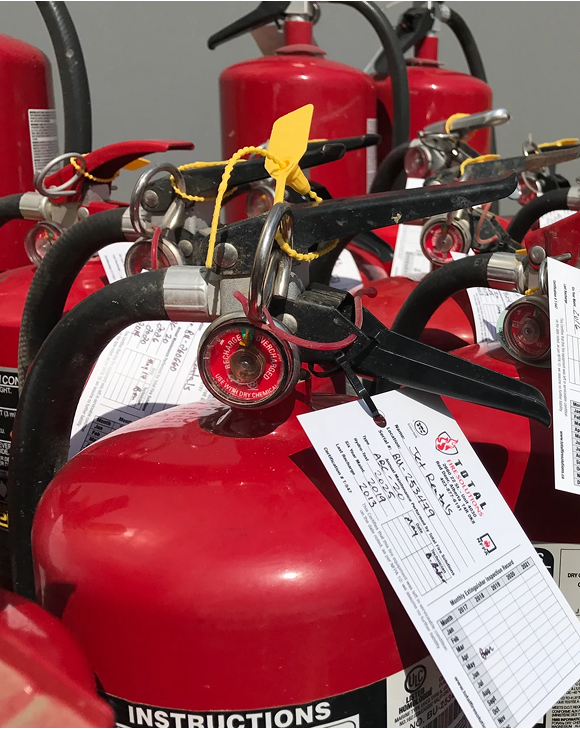
Fire extinguisher service scope
- Annual portable fire extinguisher servicing.
- Low-pressure and high-pressure extinguisher hydrotesting.
- Mobile extinguisher service using an on-site lab.
Servicing and hydrotesting answer different questions. Servicing examines the extinguisher as equipment, including its condition and service history. Hydrotesting assesses whether the pressure cylinder can safely withstand the required test conditions. A hydrotest is not a substitute for every inspection, maintenance, recharge or acceptance activity that may apply to a particular extinguisher or site.
What the service assesses
A useful review starts with the unit itself. The technician needs to identify the extinguisher type, agent, capacity, manufacturer information, cylinder construction and permanent markings. The service history can show whether the unit has been discharged, repaired, previously hydrotested or kept out of service. Damage, corrosion, missing parts, an unreadable label or an unsuitable location may change the work that is appropriate.
Low-pressure and high-pressure cylinders are not interchangeable categories. Their markings, equipment and qualification requirements can differ. Transport Canada states that Canadian and U.S. pressure-cylinder systems use different regulatory marks and approval frameworks, even though some approved pressure receptacles may be recognized for transportation between the two countries. A cylinder marked for one system should not be assumed to qualify for the other. The marking and the intended use need to be checked before testing or transport.
Standards and jurisdiction
NFPA 10 provides a widely used framework for portable extinguisher inspection, maintenance, hydrostatic testing and records. Its public guidance separates an owner or representative's visual inspection from qualified maintenance and hydrostatic testing, and notes that timing varies with the extinguisher's characteristics. NFPA 10 is a consensus standard, not a universal statement of Canadian law. The adopted fire code, the authority having jurisdiction, the manufacturer's instructions and any client or insurer program may set the requirements for a particular site.
Ontario's Fire Code, for example, makes the owner responsible for carrying out the Code and requires records of tests and corrective measures to be retained for the specified period. This example shows why a service request should identify the site's province or territory, occupancy and governing program rather than applying one national interval to every extinguisher.
For cylinders used in Canadian dangerous-goods transportation, Transport Canada requires the applicable specification, markings and requalification framework to be followed. A Canadian Transport Canada registration and a U.S. Department of Transportation approval are not interchangeable credentials. Total Group can review the equipment details provided with an inquiry so the requested work can be matched to the applicable scope.
When to arrange service
Arrange a review when a planned service date is approaching, a unit has been discharged or damaged, a tag or record is missing, a hydrotest date is due for review, or equipment is being moved as part of maintenance, a shutdown or a turnaround. A change in process, occupancy or fire hazard may also require the site team to reassess whether the extinguisher selection and placement remain suitable.
Owner checks and qualified service work are different responsibilities. Site personnel should follow their own fire-safety program for routine visual checks, access and reporting of defects. Do not open, recharge, pressure-test or repair an extinguisher as a do-it-yourself task. If a unit is removed from service, the responsible site contact should decide how fire protection will be managed while the work is underway. Temporary arrangements are site decisions and are not assumed to be included in every service request.
Planning mobile lab service
A mobile lab can be useful where a site has many portable units or several buildings to coordinate. Before arranging the visit, identify the site location, the number and location of extinguishers, access routes, escort requirements, setup space and any operating restrictions. Share the preferred work window and explain whether the work must fit around production, maintenance, a shutdown or a turnaround.
On-site service does not make every unit eligible for the same work. The equipment still needs to be reviewed against its markings, condition, history and the applicable requirements. Portable extinguisher work is also separate from fixed-system activities such as foam-system or deluge testing. A method used for another fire-protection system does not automatically replace the inspection, maintenance or hydrostatic testing required for a portable extinguisher.
Documentation and deficiency follow-up
Keep the extinguisher inventory, service tags, previous reports and known hydrotest dates available. Ask that the agreed scope identify which units were reviewed and how findings, failed tests or units needing further action will be recorded. A service tag, test mark, report or certificate may have a different purpose, and the document required by an authority, insurer or client should be confirmed before work is scheduled.
If a unit is rejected, damaged or otherwise unsuitable for continued service, the site team should coordinate the next decision through its fire-protection program. That may involve repair, replacement, removal or another qualified review. The correct outcome depends on the unit and the governing requirements; it should not be assumed from a photograph or a missing date alone.
What to prepare for an inquiry
Send the information you have available:
- Equipment details: Extinguisher types, agents, capacities, quantities, locations and photographs of labels or service tags.
- Markings and history: Cylinder markings, previous hydrotest dates, service records and known repairs or recharges.
- Reason for the request: Annual service, low- or high-pressure hydrotesting, mobile lab work, a damaged unit or a planned shutdown.
- Site coordination: Facility location, access restrictions, setup information, preferred work window and site contact.
If records are incomplete, tell us what is available rather than guessing. Total Group can discuss the equipment information and requested work so the service scope can be confirmed for the site.
Discuss your fire extinguisher service requirements
Contact Total Group with your extinguisher list, site location, available records and preferred timing. Tell us whether you need annual servicing, hydrotesting or mobile lab service. For related fire-protection work, visit our Fire Services hub.
Sources
- NFPA: Guide to Fire Extinguisher Inspection, Testing, and Maintenance. Explains the distinction between inspection, maintenance and hydrostatic testing, including qualifications and records.
- Transport Canada: Cylinders, spheres and tubes — requirements. Explains TC and DOT markings, selection, requalification and registered facilities.
- Ontario Regulation 388/97: Fire Code. Provides an example of jurisdiction-specific owner responsibilities and records requirements.
- Government of Alberta: 19-FCI-009R1 Portable fire extinguishers. Alberta fire-code interpretation material referencing portable-extinguisher requirements and NFPA 10.


