Hot Tapping and Line Stopping: Working on Live Systems Safely
Total Group of Companies
In the complex landscape of modern industry, hot tapping and line stopping need engineering review, proven pressure containment, and clear safety controls. Establish whether live work is justified before approving it. Keeping a system operating does not establish that the method is safe.
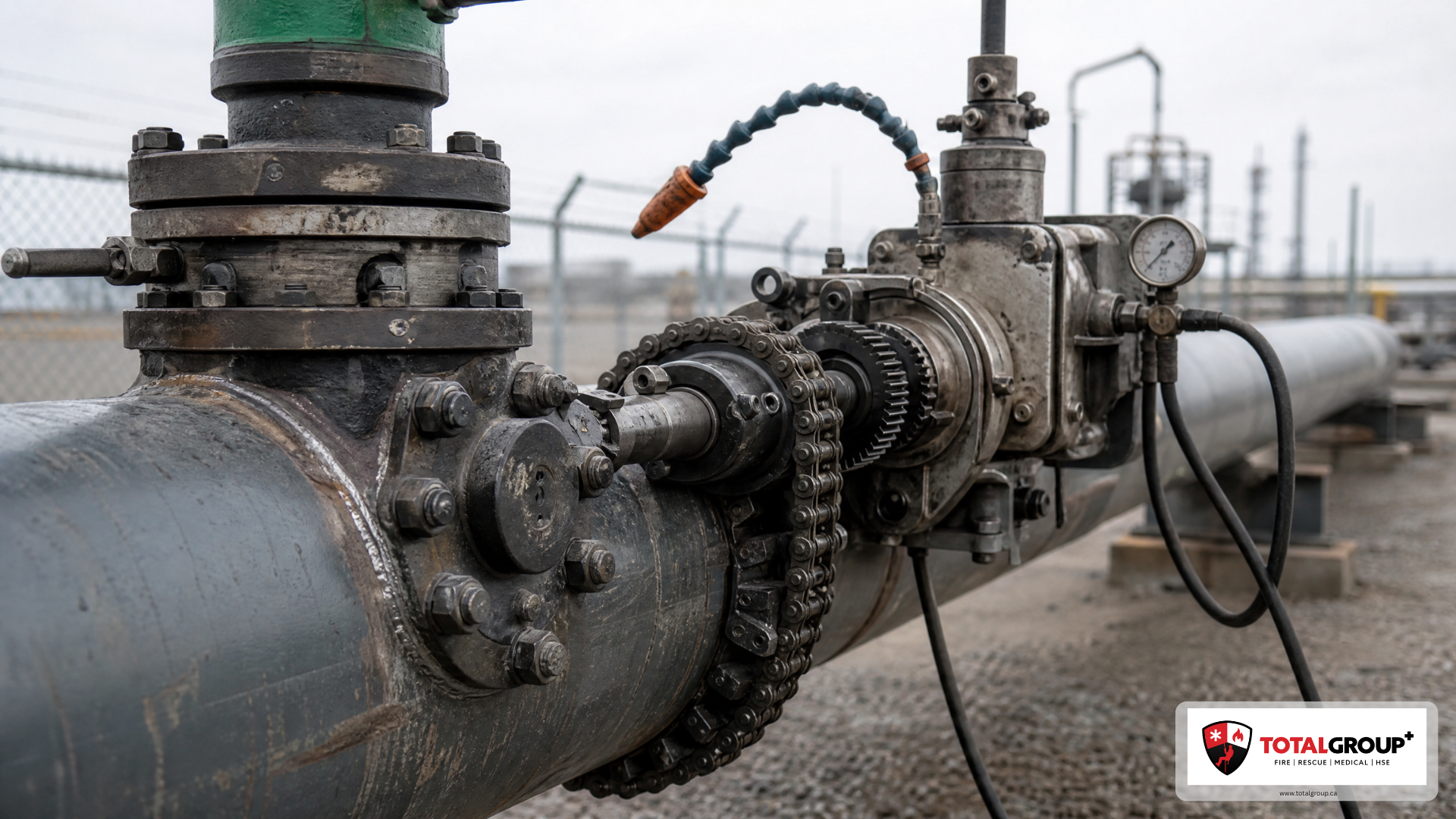
Hot tapping creates an opening into an operating pipe using specialized equipment that maintains containment. Line stopping places a temporary barrier inside the pipe to isolate a section; an engineered bypass may allow service to continue. These are different operations, and a successful tap does not establish that downstream work is safely isolated. 1 2
Establish whether the live system is suitable for intervention
Consider shutdown and other options before committing to live work. The UK's Health and Safety Executive recommends intrusive work on live plant only where there is no reasonably practicable alternative. Its isolation guidance is a useful planning reference, not Canadian law. 2
Verify the pipe and process information
The technical review needs reliable information about pipe material, condition, wall thickness and operating pressure, as well as the product and temperature. Check the actual location against drawings and inspection records. Manufacturer guidance identifies pipeline condition, material properties, equipment suitability and process contents as factors requiring review for each tap. An old drawing cannot confirm today's pipe condition. 1
In a hypothetical maintenance project, a proposed connection has incomplete corrosion inspection records. The team pauses for assessment; the tapping equipment's pressure rating cannot establish pipe integrity.
Where welding is involved, qualified technical personnel must assess the suitability of the connection and welding procedure for the operating system. Do not borrow welding settings or wall thickness limits from an unrelated job. The tapping machine, fitting and valve need to function as a compatible pressure boundary. 1
Treat line stopping as a verified isolation arrangement
A line stop is part of an isolation plan, not automatic permission to open the pipe. Assess the barrier's suitability for the fluid and expected pressure differential, how its integrity will be proved and monitored, and what happens if it leaks or conditions change. UK isolation guidance calls for assessment through installation, proving, intrusive work and reinstatement. 2
Address trapped pressure and every connected source
Review branches, shared systems and trapped inventories with the people controlling the process. The plan should identify the intended work section, the required isolation standard and the means of safely handling retained material. A zero reading at one point does not explain every connected source of pressure. Testing, draining and venting arrangements need technical approval rather than improvised field decisions. 2
In a hypothetical line replacement, another crew proposes changing upstream pressure. Operations and the specialist contractor reassess the temporary isolation before that change proceeds. The original permit cannot cover an unreviewed pressure change.
Confirm Canadian hot tapping and isolation duties
Canadian requirements take priority in Canada. Alberta's OHS Code section 170 requires a hot tap plan covering hazard analysis, sequence, precautions and emergency response. It also requires competent workers, adequate pressure barrier strength and suitable equipment. Under section 215.5(5), alternate piping isolation requires blanking, blinding or double block and bleed to be not reasonably practicable and procedures certified by a professional engineer as safe and appropriate for worker protection. This is not a blanket hot tapping exemption. 3
ABSA treats hot tapping of regulated Alberta pressure equipment as an alteration, with applicable authorization and procedure submission requirements. Hot tapping boilers and boiler external piping is not permitted. 9
CSA Z662 concerns oil and gas pipeline systems. Confirm the system scope, governing regulator and adopted edition rather than assuming it applies to every plant pipe. 4
For comparison, US OSHA's lockout rule has a scoped hot tap exception requiring essential continuity of service, impractical shutdown and documented procedures with special equipment providing proven effective protection. This is US law, not a Canadian shortcut. 7
Connect permits to actual fire and exposure controls
CCOHS hot work guidance addresses authorization, equipment condition, combustible materials and trained fire watch personnel. A permit records the controls; it cannot replace them. WHMIS safety data sheets help identify product hazards, reactivity and emergency measures, but do not determine whether a pipeline is technically suitable for tapping. 5 6
Plan abnormal conditions and the final handover
Agree on stop criteria, communications and emergency actions before work begins. Keep access and escape routes clear, and coordinate neighbouring activities. Capture isolation changes and the requirements for inspection, testing and reinstatement in the work records. UK guidance emphasizes authorization of changed isolation arrangements and controlled reinstatement. 2
Include containment and environmental reporting responsibilities. In British Columbia, qualifying spills require immediate reporting, including spills meeting prescribed quantity thresholds or affecting or potentially affecting water. An internal incident report does not replace that notification. 8 Total Group's turnaround safety advisors support coordination, observations and escalation within assigned authority. Engineering approval and the employer's and responsible site authorities' duties remain with those accountable for them.
To learn more about how Total Group of Companies can support safety planning for hot tapping and line stopping, visit us at www.totalgroup.ca or contact our team directly. We are ready to help you build a safer, more resilient operation.
References
1. T.D. Williamson. Safe, Efficient Pipeline Hot Tapping
2. UK HSE. The safe isolation of plant and equipment, HSG253.
3. Alberta. OHS Code, sections 170 and 215.5.
4. Standards Council of Canada. CSA Z662:23 scope.
5. CCOHS. Welding: Hot Work.
6. CCOHS. WHMIS: Safety Data Sheets.
7. US OSHA. Section 1910.147, Control of hazardous energy.
8. British Columbia. Report a spill.
9. ABSA. AB 513, Pressure Equipment Repair and Alteration Requirements, section 14.